I built a tiny record player
It’s about the size of your hand, fully 3D printed, with tiny vinyl records roughly ten centimetres wide. Each record has an NFC tag hidden underneath the label, and when you drop it onto the spindle the reader inside the player detects it and triggers an album or playlist. There’s no screen, no app interaction in the moment, no menus. You just pick a record and place it down.
The platter doesn’t spin (although I’ve spent a concerning amount of time looking at motors and reduction ratios) but it doesn’t need to. The interaction still feels surprisingly real and people immediately understand what to do with it. You put a little crate of records on a table and within seconds someone is selecting one and seeing what happens, even my 6 year old daughter.
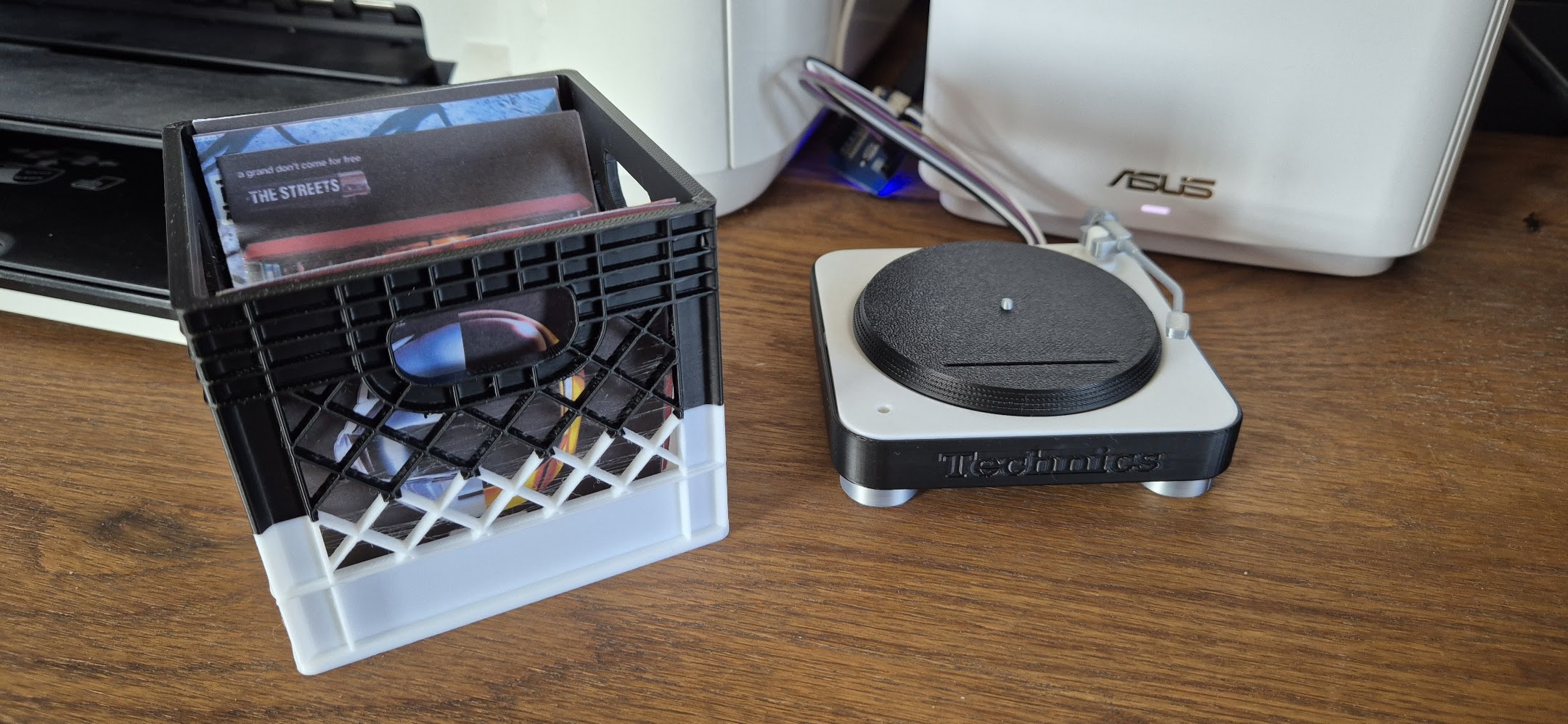
That instant understanding has been one of my favourite parts of the whole project. So much of the smart home and IoT world requires explanation, onboarding, or some degree of technical tolerance. This doesn’t. It feels obvious in a way that software interfaces rarely do.
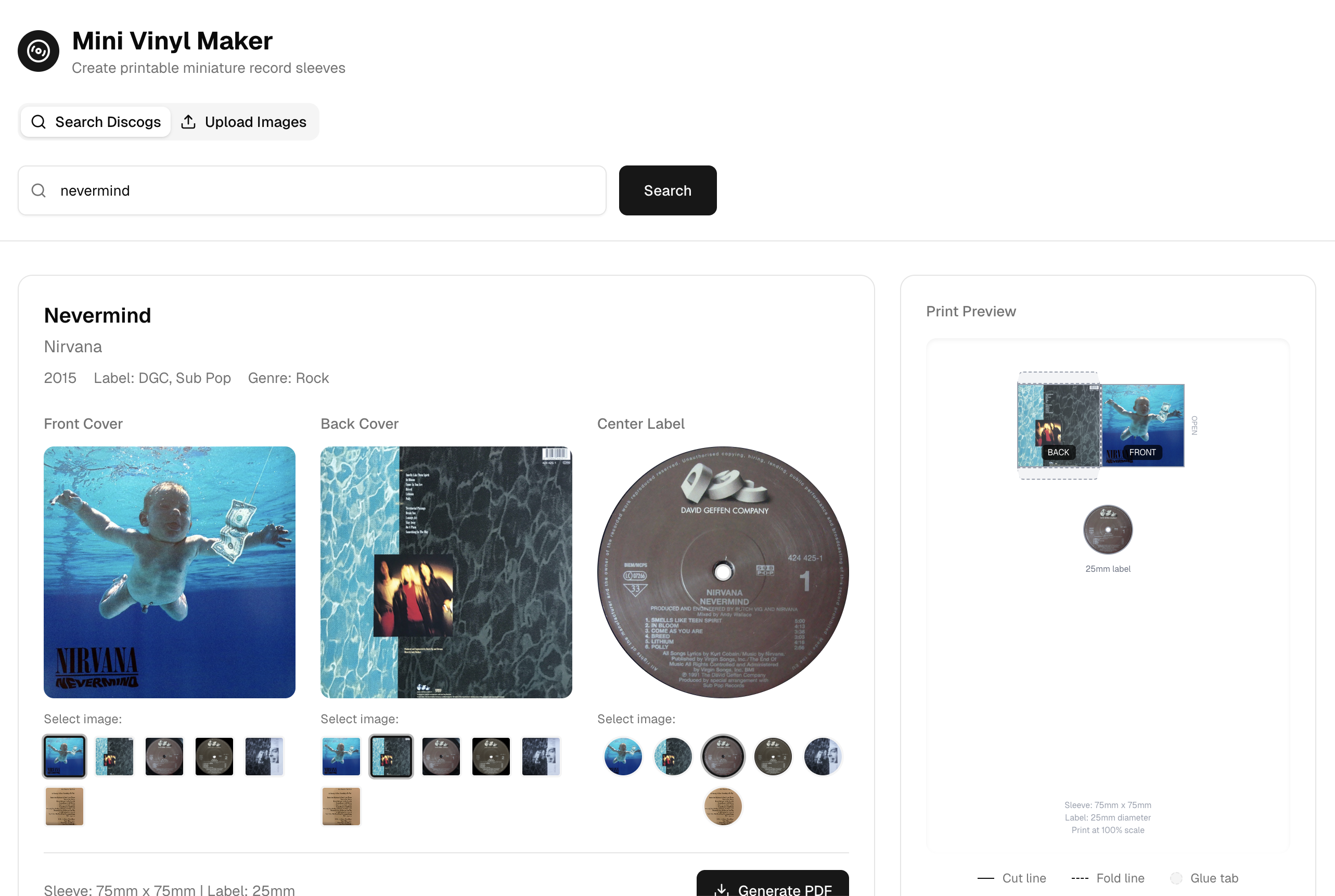
Making the records themselves has also been weirdly satisfying. Printing stacks of them, designing tiny centre labels for different albums, building a miniature record crate to store them in. It scratches that slightly nostalgic collector instinct without needing shelves full of actual vinyl. I made a web interface that searches discogs for the artwork and generates the net of the sleeve that I can then print and fold.
Version one was very much a prototype. The ESP32 brain lived outside the enclosure with dupont wires doing their best impression of permanent infrastructure. Version two is much more self-contained. Everything now lives inside the case, it boots cleanly, reads tags reliably, and feels like a proper object rather than something mid-experiment. At the moment it talks to Home Assistant over MQTT, which is perfect for me but probably not the friendliest setup story for normal humans.
If I ever made more of these I’d need to rethink that part completely. Some kind of simple cloud mapping service or direct Spotify pairing would make it far more plug-and-play. But equally there’s something quite nice about it remaining a slightly nerdy artefact that exists purely because it was interesting to build.
Not every project needs to become a product or a business idea. Sometimes it’s enough to make something small and delightful that sits on your desk and reminds you why you like building things in the first place. And there’s something quite satisfying about using very modern technology to recreate a ritual from decades ago, especially when the result fits in the palm of your hand.
🎶